
What’s something most people don’t understand?
Most people don’t understand how important the quality of their quilt backing is. There are many factors that can affect the quality of your finished quilt when choosing your backing. One is that if you choose to use a sheet, or sheets, the thread count should not be so high that the needle has trouble slipping between the threads. With a high thread-count sheet. It tends to pierce the fabric, which doesn’t look as good as when the needle can slip between the threads.
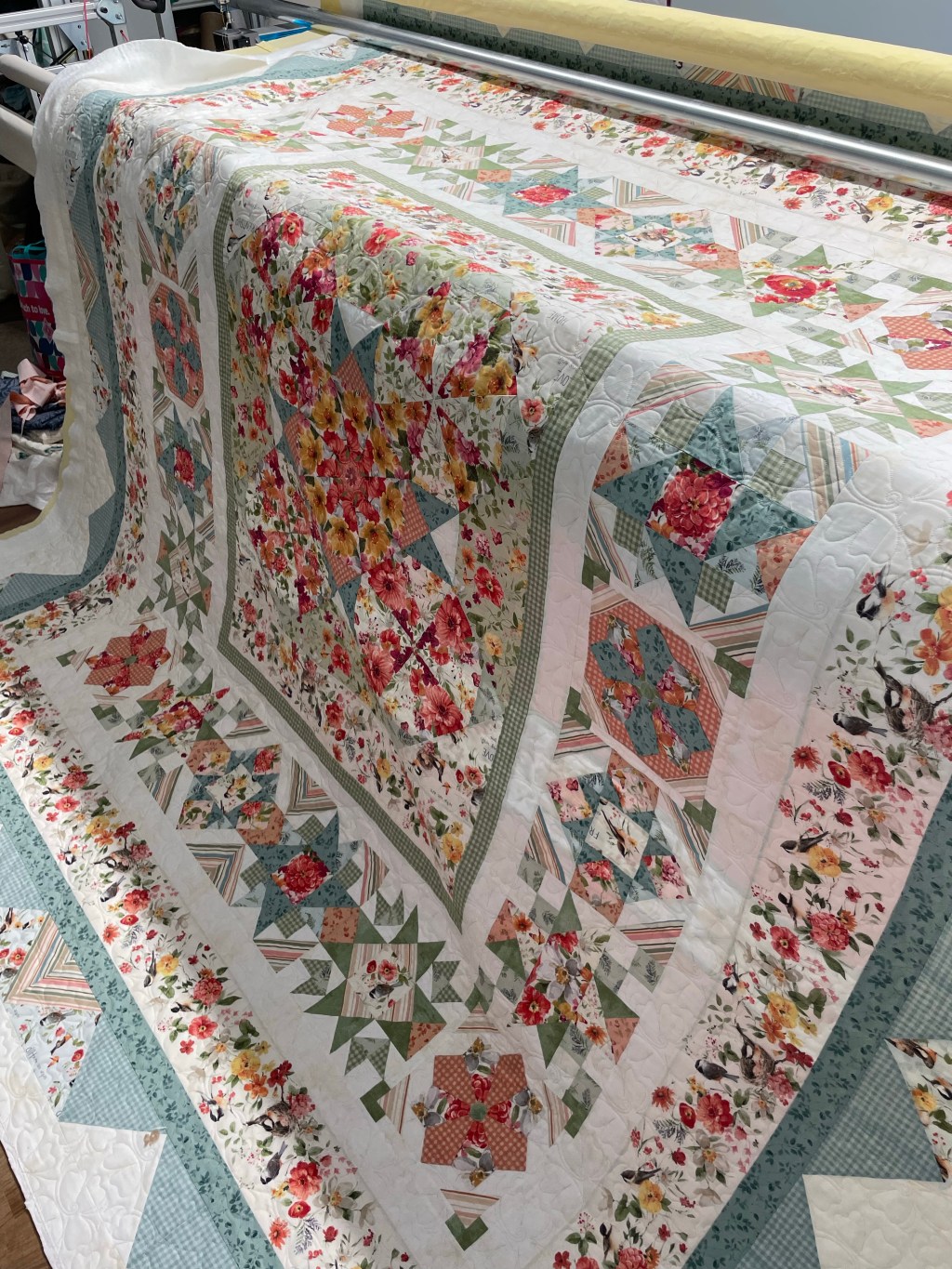
Another factor is multiple seams that go in different directions. This can be problematic. Ideally, if you are piecing your back together then your seams will all run the same direction, parallel to each other. Here is a quilt I recently did that had both of these issues.
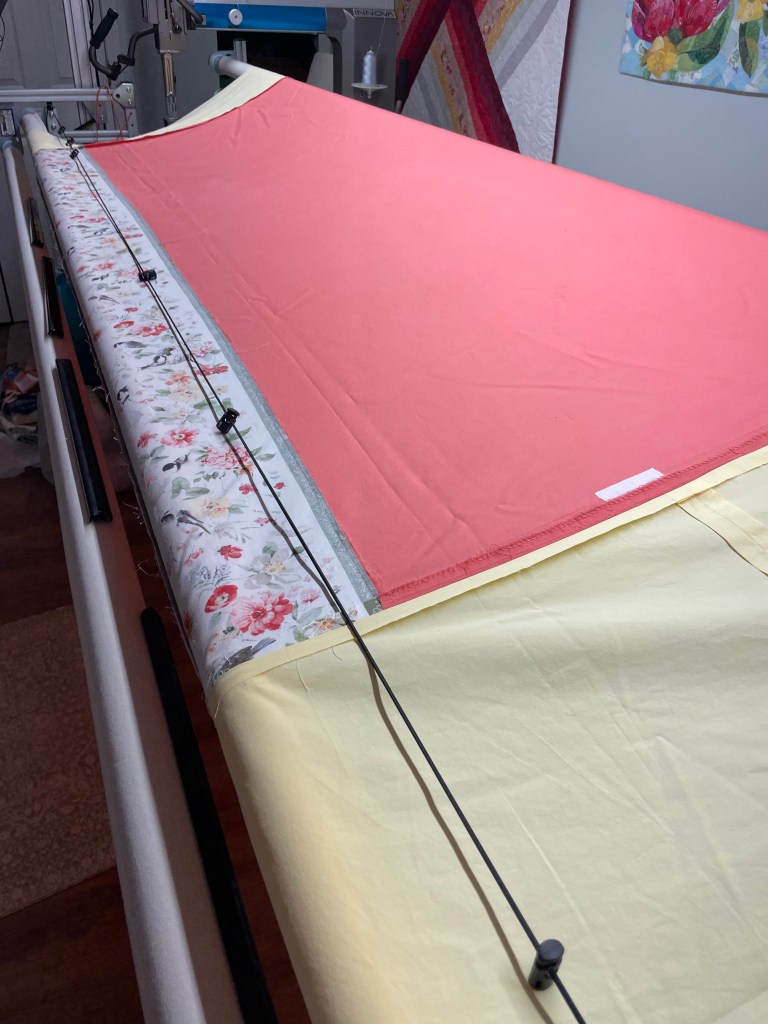
Two different sheets were used for the backing, and the yellow sheet was used on three sides of the terra cotta sheet so it had perpendicular seams on it.

It’s always preferable to load the quilt back with the seams, running parallel to the bars of the longarm, but that’s impossible in this case. You can see in the photos that at one point the center was sagging, and then later in another area, the sides were sagging. To add yet another literal wrinkle to that is the embroidered dedication that had stabilizer on the back of it, which caused some added ripples in the backing as well. I was very concerned that we were going to have wrinkles or tucks quilted into the backing and I let the client know of my concerns. She was willing to take the risk.
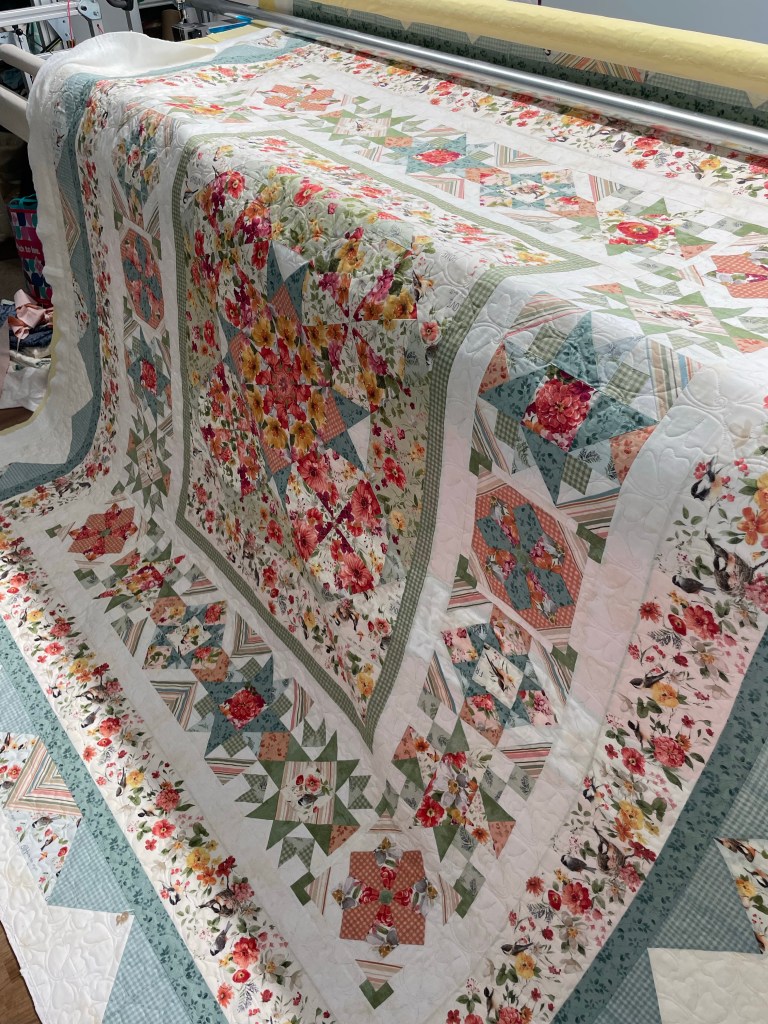
This is in no way a criticism of her choices because I am firmly in the camp of using what you have and even recycling clothing or sheets in quilts. Our ancestors used what they had and I believe that we should also use what we have. Every quilt does not need to be made from brand new yardage. In the end, the back of this beauty was perfect despite my concerns.
What’s my recommendation? If you are going to piece your back and put in orphan blocks or a strip of fabric to make it wider or use up your scraps, it’s helpful if your seams all run the same direction. That’s obviously not possible in the case of using orphaned blocks on the back, but those seams are generally shorter and not problematic. You can help your longarmer out by minimizing seams, keeping them parallel as much as possible, removing selvages, and also being willing to accept any issues that might arise from your scrappily pieced back.
Tell me in the comments about your experiences with piecing backs and what kind of backs you make!
 Stella Quilting
Leave a comment